

Beyond keywords and backlinks lies the digital infrastructure. If your technical foundation is fractured, your growth is capped. Here is how to diagnose the 5 most common architectural flaws.
Introduction
You’ve invested in the design. You’ve refined the copy. Your WordPress or Dokan platform is live. Yet, the traffic isn’t hitting the targets defined in your original blueprint.
At Cosmocubix, when we perform deep-level architectural audits, we rarely find that the problem is the visible brand. The culprit is almost always a Silent Killer—a technical friction point nested deep within the data layer or server architecture.
If Google’s crawlers encounter structural confusion, they retreat. These flaws drain your crawl budget and dilute your authority. Here are the five killers we find most often, and the protocols to neutralize them.
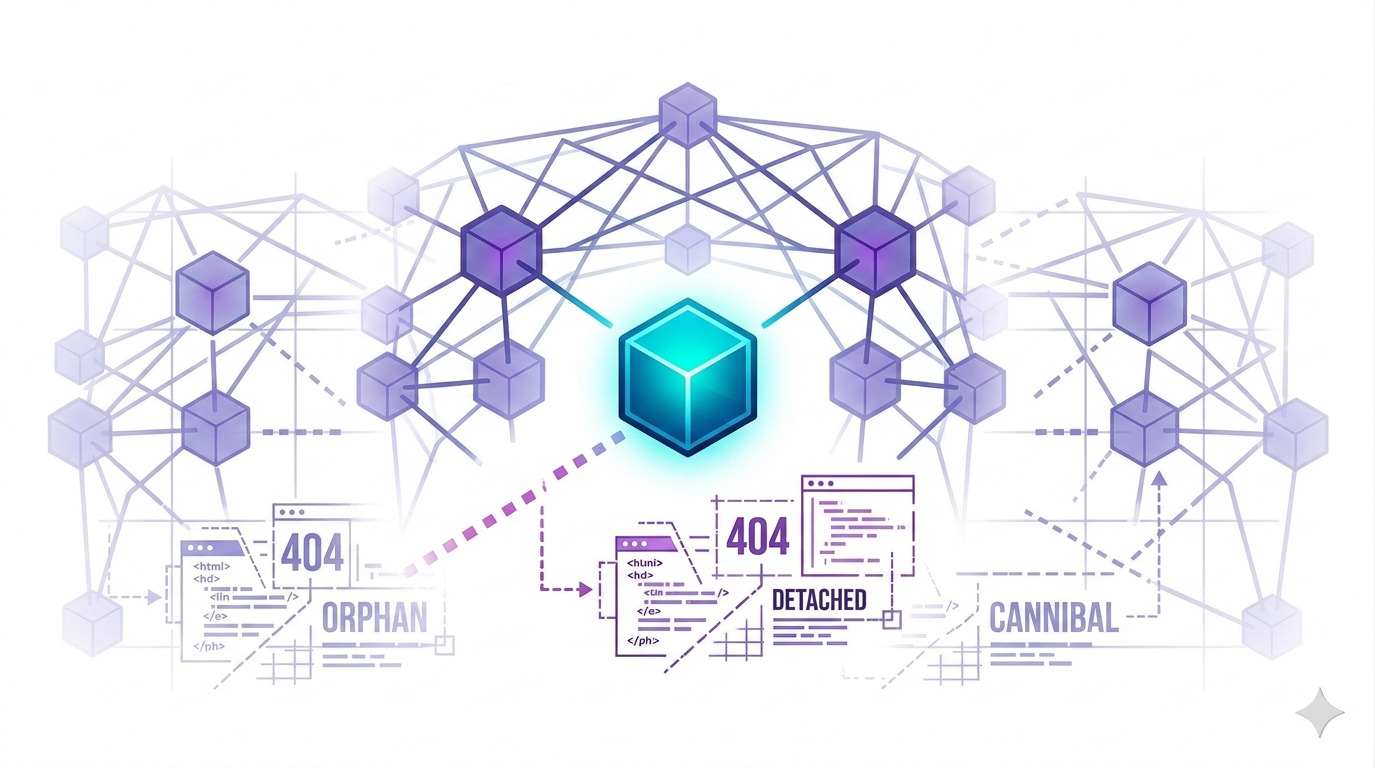
1. Orphan Pages: The Invisible Assets
The Concept: Orphan pages are URLs that exist on your server but have zero internal links pointing to them. They are islands in your digital ocean.
The Impact: Google finds content by following links. If a page isn’t linked to, it’s effectively invisible to crawlers. Even your best content won’t rank if it isn’t part of the “connected” grid.
The Cosmocubix Blueprint:
- Audit: Cross-reference your sitemap against a fresh site crawl.
- Fix: Ensure every page connects to at least three relevant “parent” nodes in your navigation or body text.
2. Duplicate Content: Semantic Confusion
The Concept: This happens when identical content appears on multiple URLs. It’s usually an infrastructure error (e.g., www vs non-www versions or URL parameters).
The Impact: Google hates redundancy. When it sees two identical pages, it splits the ranking power between them. Result? Neither page makes it to page one.

The Cosmocubix Blueprint:
- Audit: Use tools to check for “Internal Duplicate” percentages.
- Fix: Enforce strict canonical tags. Tell Google exactly which “cube” in your architecture is the master copy.
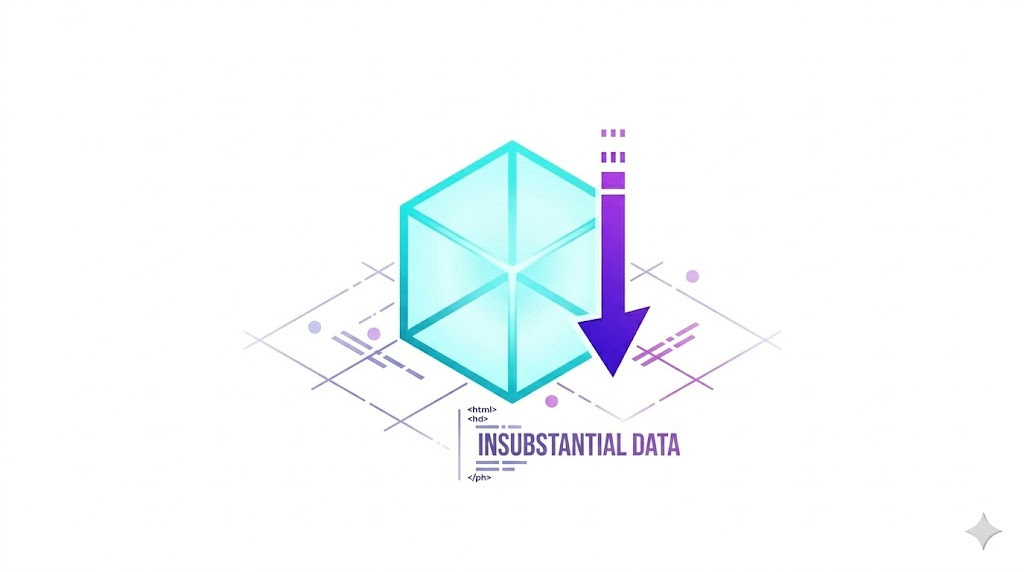
3. Thin Content: Insubstantial Data Nodes
The Concept: Pages with very little unique value or “hollow” information. In e-commerce (like Dokan), this often happens with auto-generated product pages.
The Impact: A site full of thin pages tells Google your infrastructure is “low quality.” This leads to a loss of overall domain trust, causing Google to stop deep-crawling your site entirely.
The Cosmocubix Blueprint:
- Audit: Identify pages with under 300 words that aren’t providing a unique utility.
- Fix: Merge or Purge. Combine weak pages into one “Power Node” or delete the clutter to save your crawl budget.
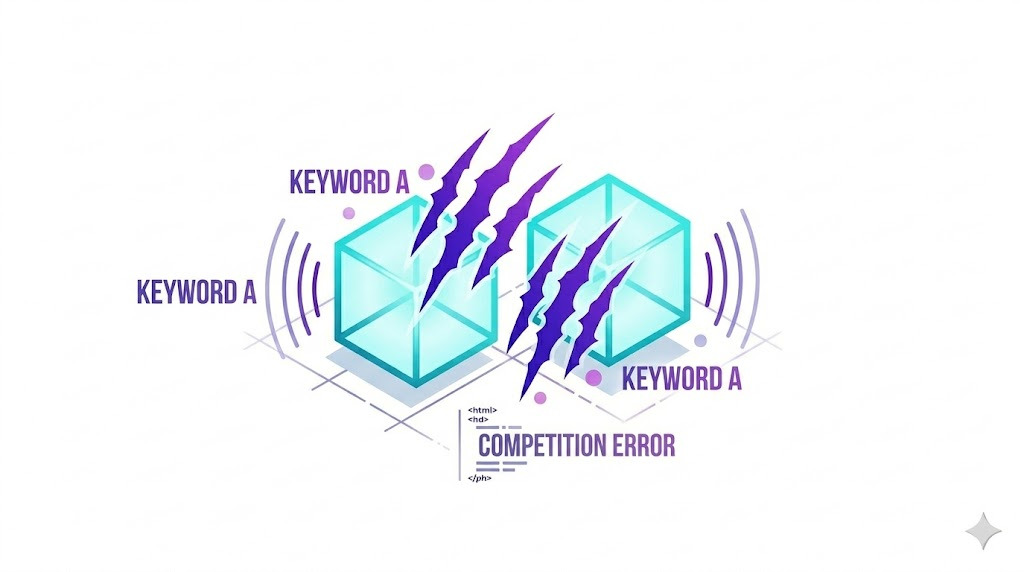
4. Keyword Cannibalization: Inter-Node Competition
The Concept: When multiple pages on your site target the exact same keyword. You are effectively racing against yourself.
The Impact: Instead of one strong page ranking #1, you have three pages stuck at #20. It signals to Google that your site architecture lacks a clear strategic hierarchy.
The Cosmocubix Blueprint:
- Audit: Search
site:yourdomain.com "keyword". If 5 different pages show up, you have a problem. - Fix: Map each primary topic to one specific URL. Use the other pages to link to that master URL.
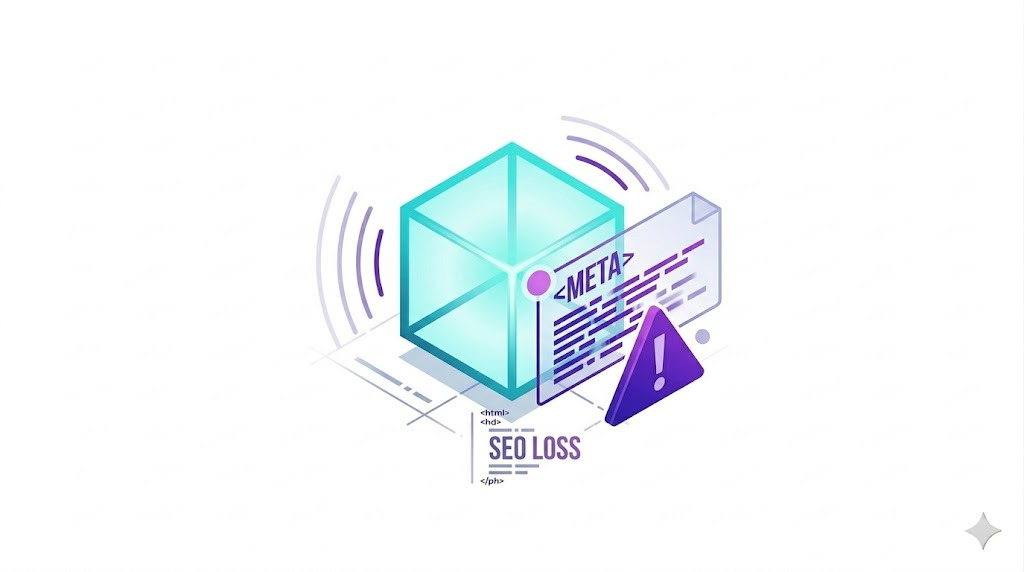
5. Unoptimized Metadata: The Muddled Signal
The Concept: Titles and Meta Descriptions are how your site “talks” to the search engine. If they are generic, duplicate, or missing, the signal is broken.
The Impact: If your title is just “Home,” Google has to guess what you do. Even if you rank, a bad meta description means no one clicks. It’s a waste of a perfect position.
The Cosmocubix Blueprint:
- Audit: Check for “Untitled” or duplicate Meta Titles across your platform.
- Fix: Every URL needs a unique, high-signal Title Tag. Treat it like the label on a high-tech blueprint.
Conclusion: Rebuilding the Infrastructure
Identifying these 5 Silent Killers is the first step toward a validated tech stack. Invisibility is an engineering problem, and engineering problems have solutions.
Is your architecture holding you back?
We specialize in diagnosing these silent errors in complex WordPress and multi-vendor environments. If your platform isn’t performing, it’s time to validate the engineering.
Contact Cosmocubix for a Technical Architecture Audit
The Cosmocubix Technical Health Checklist
Use this 5-point protocol to audit your current digital infrastructure. If you check “No” on more than two, your architecture is likely suppressed.
1. Connectivity Audit (Orphan Pages)
- [ ] Can every page on my site be reached in 3 clicks or less from the homepage?
- [ ] Does my XML Sitemap match the actual number of “Live” pages found in a crawl?
- [ ] The Fix: Link “island” pages into your main service categories.
2. Redundancy Check (Duplicate Content)
- [ ] Does my site resolve to one single version (e.g., only
https://cosmocubix.com)? - [ ] Are my “Filter” and “Category” pages (common in Dokan/E-commerce) using Canonical Tags?
- [ ] The Fix: Set a primary domain in your server settings and use
rel="canonical"on all similar pages.
3. Substance Validation (Thin Content)
- [ ] Have I identified and removed “Placeholder” pages or empty product categories?
- [ ] Does every page intended to rank have at least 300+ words of unique, expert data?
- [ ] The Fix: Merge “thin” blog posts into one comprehensive “Pillar” article.
4. Hierarchy Alignment (Keyword Cannibalization)
- [ ] Does each of my primary services have one (and only one) dedicated landing page?
- [ ] When I search my own site, do multiple pages compete for the same search term?
- [ ] The Fix: Use 301 redirects to merge competing pages or re-optimize the “weaker” page for a long-tail variation.
5. Signal Strength (Metadata)
- [ ] Does every single page have a unique
<title>tag that includes a target keyword? - [ ] Are my Meta Descriptions compelling enough to earn a click, or are they cut off?
- [ ] The Fix: Audit your WordPress/Dokan SEO settings to ensure “Global” titles aren’t creating duplicates.
How did you score?
If your infrastructure is showing “red” on this checklist, you aren’t just losing rankings—you’re wasting your crawl budget.
Next Steps for You:
- Placement: I’d put this in a high-contrast box (maybe with a light blue background and a subtle grid pattern to match the Graphic Design icon style).
- Lead Gen: You could even offer a “Full 50-Point PDF Checklist” as a smaller lead magnet at the end of this section if you still want to capture emails.
Contact Cosmocubix for a Technical Architecture Audit